
Exciter 220
Well-Known Member
- Messages
- 183
- Reaction score
- 92
- Points
- 62
- Location
- West Texas
- Boat Make
- Yamaha
- Year
- 1997
- Boat Model
- Exciter
- Boat Length
- 17
I have been blessed with two Yamaha Exciter twin-engine boats. I changed the mid-shaft bearings on my 1999 Exciter 270 last year, and I just finished changing the bearings on my 1997 Exciter 220 recently. What a pain!
While changing four of these bearings I encountered various problems. I’ve got some solutions and other thoughts about the Yamaha design.
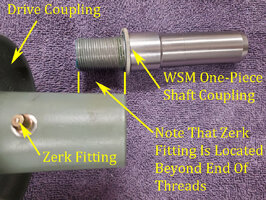
The Yamaha boats and Waverunners have a driveshaft that turns the impeller in the jet pump. The engine turns a flexible coupling. Between this coupling and driveshaft is another short shaft that connects them together—the mid-shaft. It is mounted on the bulkhead behind the engine. The mid-shaft assembly contains a bearing and seals that keep water out of the engine bay. It also prevents force from the impeller from pushing on the engine crankshaft. When the seals eventually fail on the mid-shaft assembly, water can get into the engine compartment. Yamaha refers to both couplings as simply ‘couplings’. To clarify this, I will refer to the coupling that connects to the engine as the ‘drive coupling’. I will call the coupling that connects to the driveshaft the ‘shaft coupling’. The shaft coupling screws into the drive coupling.
You can buy the bearings and seals separately and press them into the housing, or you can do what I did and buy a pre-assembled housing with new bearings & seals already installed (WSM). By doing this you not only save time & trouble, but you get ALL NEW rubber components.
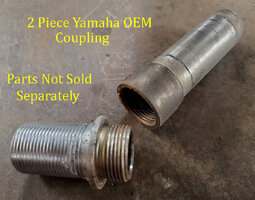
The original Yamaha shaft coupling consists of two pieces that are not sold separately. The WSM shaft coupling is one piece.
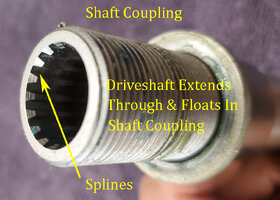
To service the mid-shaft bearing, the engine must be slid forward and/or raised. Ideally the bearing assembly is simply unbolted from the bulkhead and slid forward. There will likely be sealant between the bulkhead and bearing, so you may have to pry it loose. The mid-shaft and the driveshaft are connected by splines. There is a good possibility that the splines will be corroded together and it will be very difficult or impossible to get them apart. In this case the jet pump and driveshaft will need to be pulled out from the back of the boat, or you may have to reach up through the intake grate and cut the driveshaft with a saw(!).
Of the four bearings I replaced, two came out fairly easily, two did not. I was able to fabricate a plate with a slide hammer and carefully beat the pump and driveshaft out of the boat. I spent days trying various methods to free the first driveshaft but couldn’t. I ended up cutting it with a saw. Methods I tried include fabricating an aluminum tool that I could slide over the driveshaft and beat with a sledge hammer. I also tried an air hammer, a torch, dry ice, and obviously penetrating oil. It was after finally cutting the shaft and examining how the mid-shaft bearing was made that I came up with the idea presented here. If you end up cutting the driveshaft, you must also cut & replace the rubber hose that covers the driveshaft.
Keep in mind that if you beat on the driveshaft to remove it, the force is actually being applied to a rubber bearing mount which absorbs most of the impact. My method allows you to apply penetrating oil directly where is it needed—the splines. Since I came up with this idea, I’ve learned that later Yamaha drive couplings have a hole drilled in the center that has a pop rivet in it. You can drill out the rivet and squirt penetrating oil in.
If you find that the splines are stuck, my method entails simply drilling a 1/8” hole in the side of the drive coupling, in the right spot, and filling it with penetrating oil. The hole should be approximately 1-3/4” from the threaded end of the drive coupling. I would suggest plugging the hole and driving the boat for an hour. (Try driving in a golf tee and cutting it off). After you get everything apart, you can enlarge the hole and thread it for a zerk fitting, as shown. (I faced it in my example). I would suggest giving the splines a shot of grease every year when you grease the mid-shaft seals.
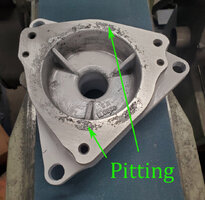
The rear half of the bearing housing has a chamber that traps water. I haven’t figured out the purpose of this chamber, but I’ve got some ideas about it that I will present at a later date. For now, water enters this chamber, but it doesn’t circulate (or drain). It just corrodes the inside of the housing. As you can see in the photo, there was considerable pitting of the housing. I sanded off most of this pitting with a belt sander to allow it to seal against the rubber seal better. I thought about milling it, but I was afraid of removing too much metal and having trouble bottoming out the dowel pins in their blind holes. I also painted the inside of the housing with epoxy paint.
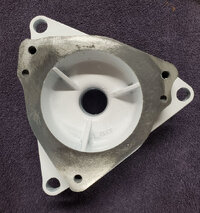
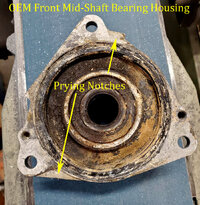
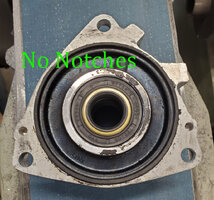
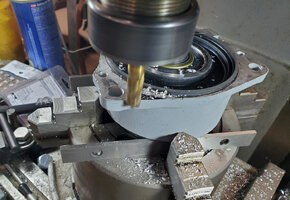
The WSM kit includes only the front half of the mid-shaft bearing housing. Unlike the original Yamaha front housing, the WSM doesn’t have notches to pry the halves apart. I duplicated the original notches on my mill. Most people don’t have such equipment, but you can do the same thing with a Dremel tool. It is not necessary to put sealant on the mating surfaces when you re-assemble them since there is an integral rubber seal.
If you remove the rear mid-shaft housing, you will have to clean off the old sealant and replace it when you bolt everything into place. To keep everything in alignment, bolt in the engine and the jet pump. Spin the engine over a couple times with the starter, then apply sealant and snug down the bearing housing bolts.
Don’t forget to grease the splines and rubber seals prior to assembly!
While changing four of these bearings I encountered various problems. I’ve got some solutions and other thoughts about the Yamaha design.
The Yamaha boats and Waverunners have a driveshaft that turns the impeller in the jet pump. The engine turns a flexible coupling. Between this coupling and driveshaft is another short shaft that connects them together—the mid-shaft. It is mounted on the bulkhead behind the engine. The mid-shaft assembly contains a bearing and seals that keep water out of the engine bay. It also prevents force from the impeller from pushing on the engine crankshaft. When the seals eventually fail on the mid-shaft assembly, water can get into the engine compartment. Yamaha refers to both couplings as simply ‘couplings’. To clarify this, I will refer to the coupling that connects to the engine as the ‘drive coupling’. I will call the coupling that connects to the driveshaft the ‘shaft coupling’. The shaft coupling screws into the drive coupling.
You can buy the bearings and seals separately and press them into the housing, or you can do what I did and buy a pre-assembled housing with new bearings & seals already installed (WSM). By doing this you not only save time & trouble, but you get ALL NEW rubber components.
The original Yamaha shaft coupling consists of two pieces that are not sold separately. The WSM shaft coupling is one piece.
To service the mid-shaft bearing, the engine must be slid forward and/or raised. Ideally the bearing assembly is simply unbolted from the bulkhead and slid forward. There will likely be sealant between the bulkhead and bearing, so you may have to pry it loose. The mid-shaft and the driveshaft are connected by splines. There is a good possibility that the splines will be corroded together and it will be very difficult or impossible to get them apart. In this case the jet pump and driveshaft will need to be pulled out from the back of the boat, or you may have to reach up through the intake grate and cut the driveshaft with a saw(!).
Of the four bearings I replaced, two came out fairly easily, two did not. I was able to fabricate a plate with a slide hammer and carefully beat the pump and driveshaft out of the boat. I spent days trying various methods to free the first driveshaft but couldn’t. I ended up cutting it with a saw. Methods I tried include fabricating an aluminum tool that I could slide over the driveshaft and beat with a sledge hammer. I also tried an air hammer, a torch, dry ice, and obviously penetrating oil. It was after finally cutting the shaft and examining how the mid-shaft bearing was made that I came up with the idea presented here. If you end up cutting the driveshaft, you must also cut & replace the rubber hose that covers the driveshaft.
Keep in mind that if you beat on the driveshaft to remove it, the force is actually being applied to a rubber bearing mount which absorbs most of the impact. My method allows you to apply penetrating oil directly where is it needed—the splines. Since I came up with this idea, I’ve learned that later Yamaha drive couplings have a hole drilled in the center that has a pop rivet in it. You can drill out the rivet and squirt penetrating oil in.
If you find that the splines are stuck, my method entails simply drilling a 1/8” hole in the side of the drive coupling, in the right spot, and filling it with penetrating oil. The hole should be approximately 1-3/4” from the threaded end of the drive coupling. I would suggest plugging the hole and driving the boat for an hour. (Try driving in a golf tee and cutting it off). After you get everything apart, you can enlarge the hole and thread it for a zerk fitting, as shown. (I faced it in my example). I would suggest giving the splines a shot of grease every year when you grease the mid-shaft seals.
The rear half of the bearing housing has a chamber that traps water. I haven’t figured out the purpose of this chamber, but I’ve got some ideas about it that I will present at a later date. For now, water enters this chamber, but it doesn’t circulate (or drain). It just corrodes the inside of the housing. As you can see in the photo, there was considerable pitting of the housing. I sanded off most of this pitting with a belt sander to allow it to seal against the rubber seal better. I thought about milling it, but I was afraid of removing too much metal and having trouble bottoming out the dowel pins in their blind holes. I also painted the inside of the housing with epoxy paint.
The WSM kit includes only the front half of the mid-shaft bearing housing. Unlike the original Yamaha front housing, the WSM doesn’t have notches to pry the halves apart. I duplicated the original notches on my mill. Most people don’t have such equipment, but you can do the same thing with a Dremel tool. It is not necessary to put sealant on the mating surfaces when you re-assemble them since there is an integral rubber seal.
If you remove the rear mid-shaft housing, you will have to clean off the old sealant and replace it when you bolt everything into place. To keep everything in alignment, bolt in the engine and the jet pump. Spin the engine over a couple times with the starter, then apply sealant and snug down the bearing housing bolts.
Don’t forget to grease the splines and rubber seals prior to assembly!


