• Welcome to Jetboaters.net!

    We are delighted you have found your way to the best Jet Boaters Forum on the internet! Please consider Signing Up so that you can enjoy all the features and offers on the forum. We have members with boats from all the major manufacturers including Yamaha, Seadoo, Scarab and Chaparral. We don't email you SPAM, and the site is totally non-commercial. So what's to lose? IT IS FREE!

    Membership allows you to ask questions (no matter how mundane), meet up with other jet boaters, see full images (not just thumbnails), browse the member map and qualifies you for members only discounts offered by vendors who run specials for our members only! (It also gets rid of this banner!)

    free hit counter

Jet Pump / Intermediate bearing / Maintenance / Rebuild

FSH 210 Sport

Jetboaters Fleet Admiral
Messages
9,952
Reaction score
12,080
Points
642
Location
Tranquility Base
Boat Make
Yamaha
Year
2020
Boat Model
FSH Sport
Boat Length
21
So I was doing my annual grease cone / jet pump maintenance and found some wear that is going to have to be dealt with. Keep in mind I have 750 hours on these shafts.

Back in June when I pulled the pumps to test a set of impellers I found some unusual wear marks on the starboard shaft where it interfaces with the intermediate shaft / coupler.

I thought I had a higher res picture of the starboard shaft back in August, but this is about as good as it gets.

This first pic is how it looked when I pulled it out, had some grease on the shaft…
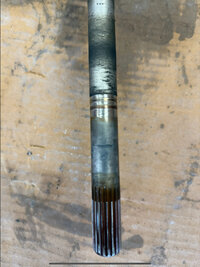

IMG_0820.jpeg

This was after I had wiped it off a little bit.
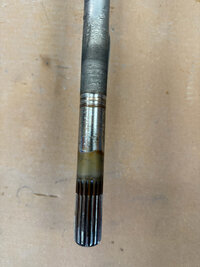
IMG_0819.jpeg


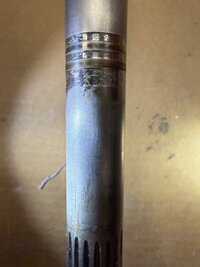
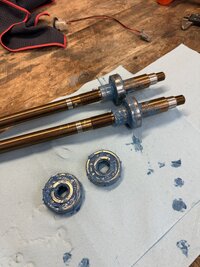
This is the starboard shaft from last week.. it didn’t have as much grease on it this time but this pic was after I had wiped it off. It’s interesting how it has that weird wear pattern under the O rings that are at the end of the intermediate shaft. Keep in mind all of this is inside the intermediate shaft, or as it’s called in the parts fische, “shaft coupler”. Also, its hard to see in the pics but the splines on the starboard side are worn down a bit on the end where the splines fade into the shaft and the wear is a bit uneven, this points to alignment issue. The intermediate bearings have been lubricated religiously and have never been removed.
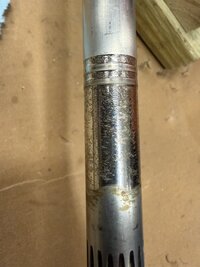
IMG_9801.jpeg

This is after I cleaned the splines thoroughly. The driven side is the left side of the splines, there is more wear on the this starboard side, and the wear tapers a little bit towards the end of the shaft.
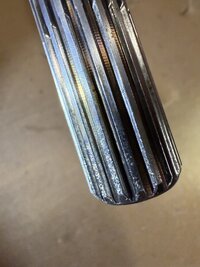
IMG_9805.jpeg

By comparison this is the port side.
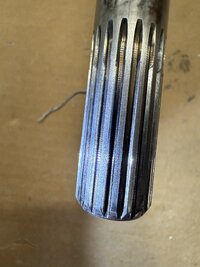
IMG_9807.jpeg

IMG_9806.jpeg

I sent these pictures off to some industry experts and the most poignant response I got was this;
Them-So is this out of a 2004 or 2006 boat?
Me-No, its a 2020 with 750 hours on it
Them-Chuckling, dude that thing is wore out! You’ve used your boat a lot which is great!
Me-Thanks, yeah I use it a lot and it’s a lot of fun.

I also sent these pictures and a description off to Vallely Sport and Marine in Bismarck, the service manager is going to have his jet drive guy who has been working on these things since the 90’s take a look as well, but his initial response was, looks like it is just the service life on these shafts, we have 2004 boats that don’t have even half of the hours you have.

So here is my conclusion. As I just mentioned today in another thread, I think the pumps should be pulled at 100 hours and the splines both on the shaft and inside the shaft / coupler should be cleaned and lubricated liberally with the molybdenum di sulphide grease. I also think I should have been using a gun cleaning rod with a shotgun patch on it to clean out the inside of the shaft coupler / intermediate shaft, and then apply some molybdenum di sulphide grease up in the shaft. There are two little O rings in there that can only be accessed with the intermediate shafts removed so you need to be mindful of that. I verified they are both still in there but are probably worn down a bit.

At the same time one should be pulling the caps or grease cones and replacing the grease in there as well. Over the past few years I’ve been putting a lot of hours on the engines trolling as I have been targeting a different species of fish that requires the use of the engines, and I’ve been averaging three oil changes a year. Hind sight being what it is I should have been pulling the pumps and lubricating the splines and this may have helped with the wear.

Also, when you pull the pumps that is the time to add grease to the intermediate bearings, and as @madtom showed with his intermediate bearings thread, if you add grease slowly, the excess will slip past the seal on back side of the intermediate bearing, and you can see this with a flash light from the stern when the pumps are out. Again, I should have been adding grease here more often as well, but I don’t think the intermediate bearings are worn out, with the pumps out I’ve got down in there and tried to feel any play in the intermediate bearings and cannot feel any at all, the cush drive rubber is still solid as well.

As a friend of mine put it, “you’ve been using a light recreational boat in a light commercial fashion”. With that in mind I’ll need to up the maintenance on the pumps, shafts and intermediate shafts accordingly.

So my jet boating brethren, this is the time of year to do this kind of maintenance, its not hard and it will take a couple of hours and will help make the components last as long as possible. Once you’ve done a pump pull, especially a couple of times, it takes longer to lay out the tools and such than it does to do the work.

Where am I at now? I am currently putting together all of the parts to do a complete rebuild on both pumps as well as new intermediate shafts and their bearing assemblies. As you might imagine these parts are not cheap, so far with new shafts, bearings, seals etc. I’m at about $2500 in parts so far, I also need to secure a couple of Yamaha speciality press and holder tools, that’ll probably add another $500 to the deal as the love joy coupler holder is $360 by itself. My friend Jim with all of his marine experience re powering large vessels with multi thousand horsepower engines and such has a plan to make sure the intermediate shafts are aligned properly when we go to re assemble it, to him I suppose this is like playing toys after installing some of those 2000 hp MAN engines… when it is all said and done, if the oem intermediates are good I’ll have a couple of spares, and a spare drive shaft. Pie in the sky it would be nice to find some used pumps and build up a second set, one for the low altitude impellers and one for the high altitude impellers, but always nice to have spares that could be swapped in to keep the boating season going.

Am I upset? Not really, I just didn’t have the experience but now I do. I’ve spent probably 2500 hours +++ on my boat over the last 5 years and I’ve had such a great time and learned a lot.

I’ll add to this thread once I get all the parts in and do the actual rebuild. Thankfully the OEM parts are still serviceable, so for the time being I can clean and lubricate everything and run it for a while longer while I get all the parts together then hopefully knock out the rebuilds in a day. Big thanks to @Neutron for all of his guidance, support and sharing his experience for getting this all done, in his words “it’ll be a piece of cake”.. and thanks to everyone else who has shared their experience working on these boats. @madtom @Dixemon to name a couple more.
 
Last edited:
Update;
I decided to buy another set of pump housings and will use the new parts I bought to make up two new housings, $213 each. As I mentioned above I’m going to make up two new complete intermediate housings. So far I’m about $3000 in for all of the parts. When I get done I will have two spare complete jet pumps and two spare intermediate bearing assemblies, the parts price will go up more when I go to rebuild the original jet pumps, and depending on what I find with the intermediate bearing assemblies I may have to buy another set of shaft couplers, if the shaft couplers are harder than the shafts then they may have a much longer service life than the shafts.

Why am I making up a spare set? Reliability is the biggest one, I’m planning on putting on a lot more hours than I have already over the next few years and these intermediate bearing / jet pumps shafts seem to be the high wear items. Reading up on the internet, it looks like the average is 500 hours for a jet pumps rebuild, (I’ve got 750 hours on mine) but that is mainly for skis and people wringing them out a lot.

We will see how it goes, but near as I can tell, one needs to pull the intermediate bearing assemblies at about 500 hours, maybe 600 and replace the two small O rings that seal the jet pumps shaft to the intermediate shaft / coupler, it looks like the shafts start to wear where the O rings ride as well which lets the grease get washed out, I’ll have to see how the wear goes and how much grease is still in the splined area at 100 hour intervals. One might need to shorten the spline maintenance as time wears on, but that would indicated the need for new O rings.

Second would be that having two sets, one with high altitude impellers and the other set with low altitude impellers would be nice to have and make going to different lakes a bit easier as swapping impellers would not be necessary just the pumps.

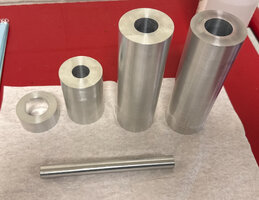
I tried to order the specialty Yamaha tools for pressing the bearings out and in along with the love joy coupler holding tool. There are none available here or in Japan. The holding tool if available was roughly $380 so either an oil filter wrench or strap wrench will be used for that job. None of the press parts are available either, so I got a hold of one of our members here and he is spinning up the press tools we need to complete this job, he is going to spin them up out of aluminum. Could we make do with improvised press tools? Yes, but I want aluminum press tools that are specific for this job…

Intermediate Bearing tool;
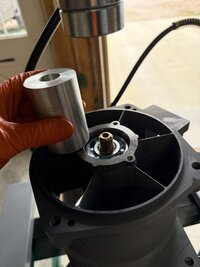
2” OD x 1” ID x 6” long to R&R the bearing

Jet Pump housing tool;
2” OD x 1” ID x 6” long, same as intermediate bearing tool to push the front or nose bearing onto the jet pump shaft before assembly
2” OD x .800” ID x 3” to push in the rear most bearing
2” OD x .870” ID x 6” long to support the jet pump shaft on the nose while the rear most bearing is pressed on.
.600” OD X 6” long to push the jet pump shaft out of the housing.

The 2” OD tools can also be used to push on / in the seals for both the pump and intermediate bearing.

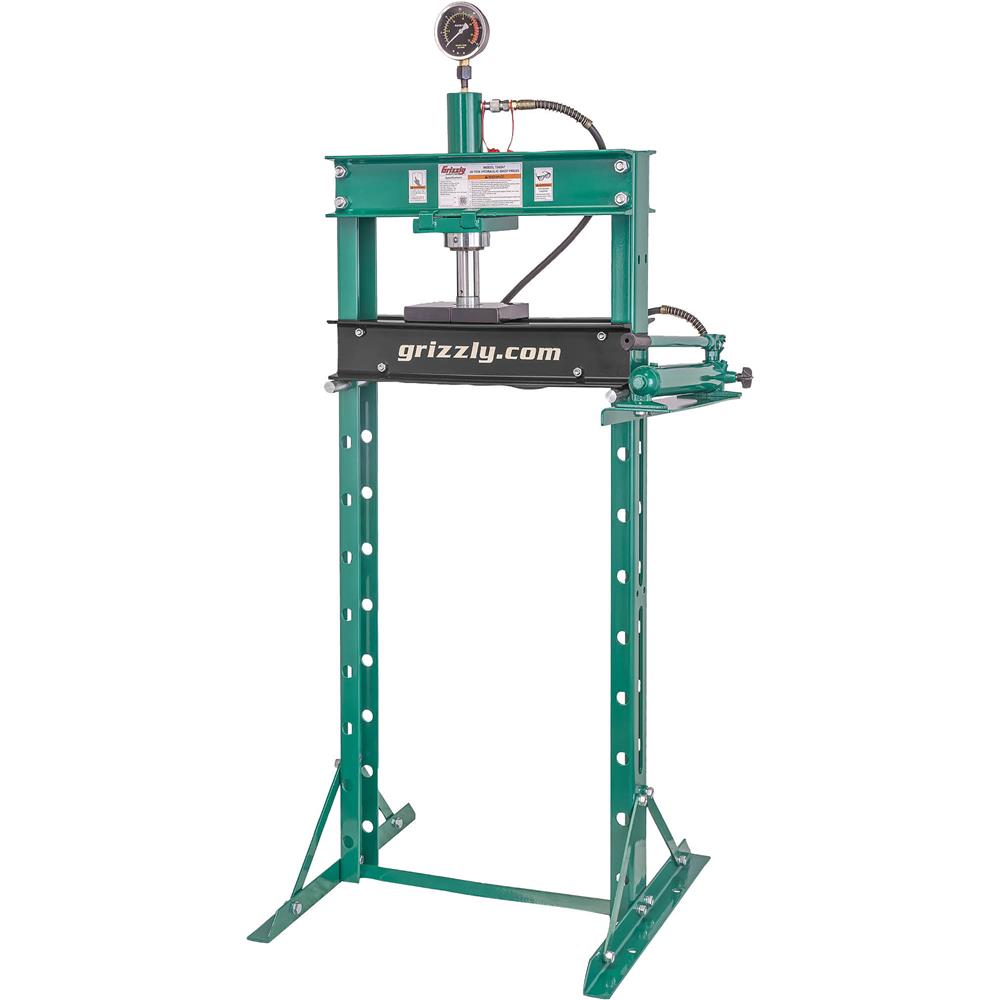
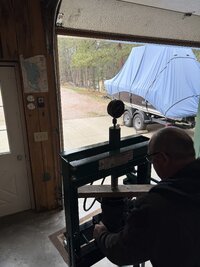
We had to secure a press for this job.

I will also be replacing the rubber cush drive thingie in between the love joy coupler halves.

I had a bit of an epiphany about the intermediate bearings and what happens if too much grease is forced in there too fast. Firstly, now that I have had a chance to see the seals up close I can see that the seals are set up to keep water out as the springs on the seals face the water or outboard side, in fact the seals are tapered on the inside to allow excess pressure or grease to escape the seals.

There are two seals that are identical on the intermediate shaft, one is on the engine side and one on the stern side.

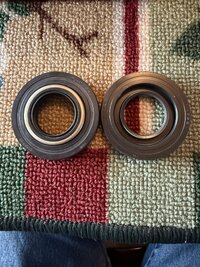
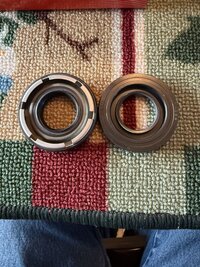
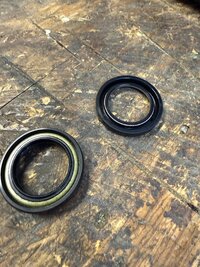
This is a picture of the two stern seals, the seal on the left is on contact with the water, had has the same part number on the seal as the seal on the right, but the seals on the left has been accessorized with another seal pressed in on the water side. On the seal on the right side you can see the spring, the back side of this bearing is facing the intermediate bearing.

IMG_9884.jpeg

You can see in this picture how the water sits up against the back side of the intermediate bearing assembly.

IMG_0883.jpeg


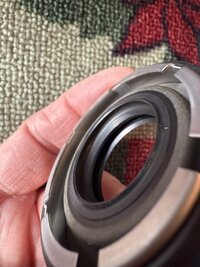
Here’s a picture of the same seals, but the outer seal has been flipped over. You can see it has been accessorized here with an additional metal ring that sits on the face of the seal on the right.

IMG_9883.jpeg

Here’s a picture of the seal that faces the water side, and we are looking at the other side, the side that faces the other seal that is under it. You can clearly see that the seal lips are tapered from a larger opening on the side facing the grease and tapering down to where it seals on the shaft.


IMG_9881.jpeg

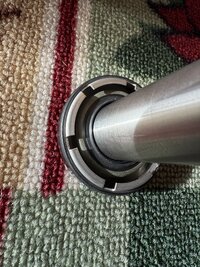
Here’s a picture of the intermediate shaft inside the outer seal which is the same as the inner seal, you can clearly see there is a gap where the grease can migrate towards the tapered seal lips.

IMG_9880.jpeg

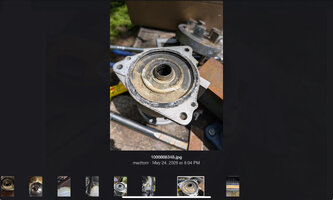
Here’s a picture that @madtom took of his rebuilt intermediate bearing assembly with a little grease leaking out past the intermediate shaft after he greased it, this is how these bearing seals are designed, to allow excess grease and pressure to slip past the seal while keeping the water out. This is an enclosed assembly after all and the pressure has to go somewhere. If you look closely at the rubber isolated portion of the assembly at about 2 O’clock, you will see a small rectangular area of rubber that is raised and is in line with the grease zerk. This is the passage where the grease flows into the inner metal collar that holds the bearing, it’s like a rubber straw for the grease. This area is also lined up with the holes in the ribber on the opposite side, I don’t have a picture to show this and the one member who’s dealer ship applied too much grease and it came out the holes in the rubber isolator on the engine side.

In my opinion, when the grease comes out the front through the isolator holes, or out through the interface between the intermediate bearing assembly and the housing that mounts to the bulk head, this rubber straw for the grease has ruptured. The intermediate bearing assembly is definitely full of grease but unless grease is seen coming out around the intermediate shaft either in the engine bay or looking up through the aft section with the pumps pulled, the shaft seals are not damaged, BUT, the rubber straw in the isolater has been ruptured. So I’d guess that if this happens you’ve probably got a season on the intermediate assembly before it would need replacing.

IMG_0882.jpeg


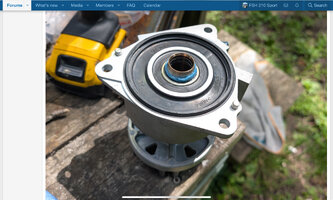
I took a couple of pictures today of one of the new intermediate housings and put an aerosol straw through the grease zerk hole to illustrate the grease channel.

IMG_9904.jpeg

And this shot looking down through the zerk fitting hole..

IMG_9905.jpeg


Again, applying grease slowly to this assembly is the way to go to keep it properly greased and excess grease will push past the seals without damaging them. Thats a picture I took this last year with the pumps out and looking up into the intermediate shaft area from the stern after I had put some grease on the intermediate bearing, and the grease is leaking past the seals just as in the picture above. Once I get these out of my boat I’ll be better able to give an assessment of the bearing condition, but for all intents and purposes the bearings do not seem excessively worn.

IMG_0894.jpeg

My friend and I will be commissioning a new boat in the fall of 2027, so this boat will continue to be lovingly cared for until the new boat arrives in spring of 2028…
 
Last edited:
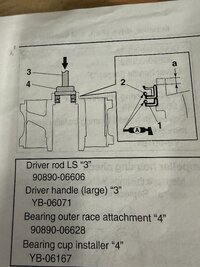
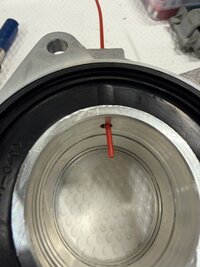
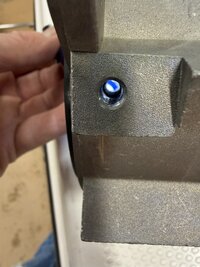
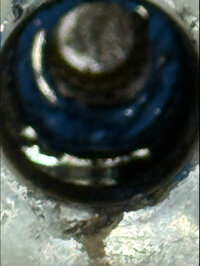
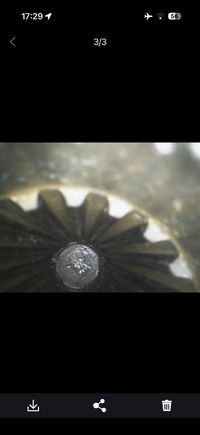
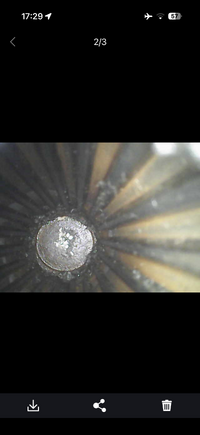
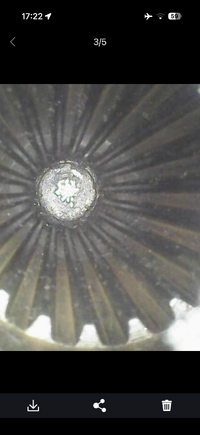
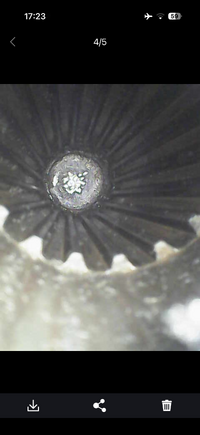
Took a 12Ga cleaning rod and cleaned out the intermediate coupler shafts today and ran my endoscope camera up there to check them out..

This is the port side, which is the side that has the least wear on the shaft.

IMG_9918.png

IMG_9917.png

This is the starboard side which is the side with the weird wear pattern and bit of an asymmetrical wear on the splines of the shaft.

IMG_9912.png

IMG_9914.png

Looks like the coupler shafts is harder than the jet pump shaft as I could not see any wear on the splines.

I had to take screen shots of the pics on the app, I wasn’t going to give some app “full access” to my photo’s to import these pics into my library..
 
Thank you for detailing and documenting the teardown.
 
Thank you for detailing and documenting the teardown.
Thanks, just trying to take the mystery out of this process for others.

It seems like it could be quite simple with the correct tools or even improvised tools. Not sure if I mentioned this above, but a search of the net my friend did showed the average time on a pump before a full rebuild is 500 hours, but that’s mainly for skis. So if one was to keep their boat for a while and use it a lot then this is an eventuality. @Floridaman79 used his boat A LOT, like most weekends
Maybe he will chime in here…

Our boats are relatively easy to work on, and the maintenance can be done with a basic set of tools in a few hours or a weekend, if you’re doing the grease cones and pulling pumps to grease the splines that’ll take about a hour to pull them, thoroughly clean and re grease the splines, clean and dress the bolts etc…
 
Great thread. Thanks for taking the time to do this. Do you have an opinion on how much grease fits in the intermediate bearing. How often would you grease it?
 
Great thread. Thanks for taking the time to do this. Do you have an opinion on how much grease fits in the intermediate bearing. How often would you grease it?
I don’t know the capacity, but there is a specific amount one is supposed to add to that bearing at the 10 hour mark. I think it’s 33 to 35 CC’s but I’d need to double check. Then at 100 hour intervals it gives another very small amount.

But, I’ve found an error in the grease cap amount of EPNOC grease that is supposed to be added, it is very low and it was the same amount that is supposed to be added to the housing itself which would make sense. As I said in my thread on the grease cone amount, I checked on that amount and the service manager had to call Yamaha tech support and he told me to fill them up. So, having said that, I think at least just using a piece of line trimmer / week wacker line as a dipstick through the greasing hole with the zerk removed is a good way. I’m going to be going with the add very slowly until I see a tiny bit come past the intermediate shaft with the pumps out approach.

At the very least, follow the service / owners manual for your boat.

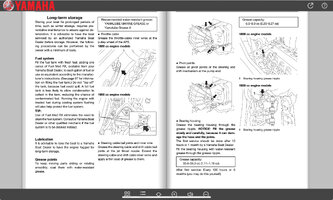
I pulled up your owners manual.. Here’s a screen shot of your manual.. right page, 33 to 35 CC’s after 10 hours, then 6-8 CC’s every 100 hours or 6 months.. go on amazon and order up a 60CC irrigation syringe, trim the nozzle to where you can screw in a grease zerk, then apply grease to the irrigation syringe and see how many pumps it takes to get 35 CC’s of grease, then put that many into the grease zerk at the back of your engine. But as the manual says; NOTICE: Fill the grease slowly and carefully, because it can damage the hose and the joints. As shown above, the seals are set up to let excess pressure / grease out, it’s a closed housing so it has to be designed that way. The service manual specifies marine grease.
IMG_0903.jpeg
 
Thanks, just trying to take the mystery out of this process for others.

It seems like it could be quite simple with the correct tools or even improvised tools. Not sure if I mentioned this above, but a search of the net my friend did showed the average time on a pump before a full rebuild is 500 hours, but that’s mainly for skis. So if one was to keep their boat for a while and use it a lot then this is an eventuality. @Floridaman79 used his boat A LOT, like most weekends
Maybe he will chime in here…

Our boats are relatively easy to work on, and the maintenance can be done with a basic set of tools in a few hours or a weekend, if you’re doing the grease cones and pulling pumps to grease the splines that’ll take about a hour to pull them, thoroughly clean and re grease the splines, clean and dress the bolts etc…

I will definitely check the grease under the cones before that many hours but doubt I will do a full rebuild before 500 unless something seems to be functioning differently. I would like to use the boat more than I have been but there are weekend commitments etc.

For the int. bearing housing greasing I went with the gear lube method but found I was not able to force the lube down the tube from the top, most likely due to the system being sealed. I had removed it from the grease zerk at the top of the engine. Perhaps I need to do this at the other end of the tube on the housing itself.
 
Took a 12Ga cleaning rod and cleaned out the intermediate coupler shafts today and ran my endoscope camera up there to check them out..

This is the port side, which is the side that has the least wear on the shaft.

View attachment 242651

View attachment 242652

This is the starboard side which is the side with the weird wear pattern and bit of an asymmetrical wear on the splines of the shaft.

View attachment 242653

View attachment 242654

Looks like the coupler shafts is harder than the jet pump shaft as I could not see any wear on the splines.

I had to take screen shots of the pics on the app, I wasn’t going to give some app “full access” to my photo’s to import these pics into my library..
Nice detail work showing all this.
 
Excellent work as usual, So many great folks on this site sharing priceless knowledge.
 
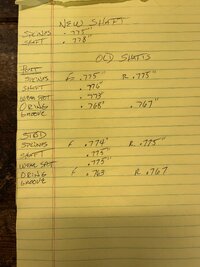
I took these measurements the other day.

IMG_9923.jpeg


These measurements were taken with a Mitutoyo caliper, and not a micrometer. I re took the measurements several times to be as accurate as possible.
IMG_0935.jpeg

There was overall not a lot of wear, but definitely some at the interface between the coupler shaft and the jet pump shaft.
 
I posted some thoughts on lubricating the intermediate shaft coupling by putting a zerk fitting on the Lovejoy coupling.


This should make it easy to remove the driveshaft in the future.

Somebody wrote about a hot mid-shaft bearing, so I tried drilling a hole in the housing so a cooling line could be run to it. I found on my boat that the bearing ran cool with or without the cooling hose. But now that it has it, I can flush the housing after use and blow all the water out with air, preventing all the corrosion inside the housing.
 
Alright alright alright..
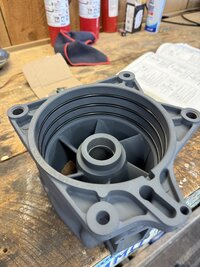
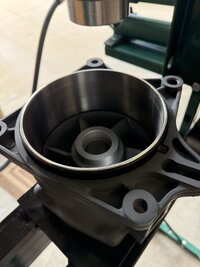
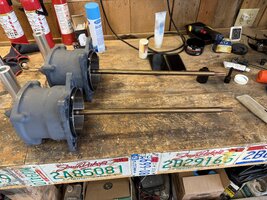
Finally getting around to assembling the two new jet pump housings.

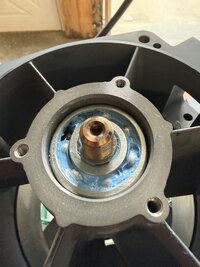
The first thing I will say, is if you think you’re getting close to wanting to do this job, just rebuilding your pump housings in the future start getting the parts together now. Some of the parts I got to do this job were kind of hard to get, and if I hadn’t bought some of them a very long time ago I’d still be waiting for the parts, like the O rings that hold the wear sleeve in the housings, each side takes 3 in the 2025 updated housing, the 2020 version takes two, they are the same O ring but with an updated number and packaging now.

Second, if it wasn’t for a friend of mine who is “good with tools” I would not have been able to get press tools. He made me some custom tools in his spare time and I am extremely grateful for them, and they worked perfectly.

IMG_1198.jpeg

My friend and I decide that we should install the wear rings in the housings first as that made sense. Got the O rings installed in the housings and gave everything that would be sliding on each other a good dousing of silicone spray, thanks @Neutron for the suggestion.

IMG_0591.jpeg

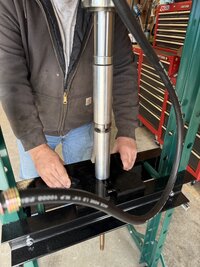
On the press we go.. the pressure gauge is great for showing you that things have bottomed out.

IMG_0594.jpeg

And wa la! Be sure and get the nipple lined up with the slot in the housing.
IMG_0595.jpeg

After that, time to install the seals in the nose of the housing.

IMG_0598.jpeg

Notice the opening of the seals face forward to keep water out.
IMG_0599.jpeg

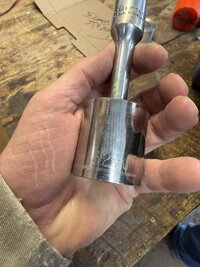
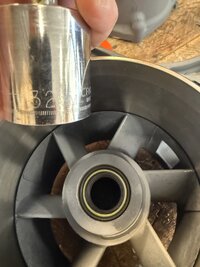
I forgot to ask my friend to make me a seal installing tool so a 32mm socket and shore extension filled in nicely.

IMG_0596.jpeg

IMG_0597.jpeg

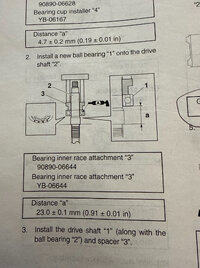
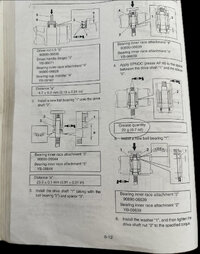
Next was installing the bearing on the nose of the shaft, this has to be set at .19”

IMG_1199.jpeg

If you look carefully below the gap you can see the short press tool that is .19”, below that is another tool that the raised seal area is sitting on.

IMG_0602.jpeg


IMG_0601.jpeg

Here are the two new shafts with their bearings installed and packed with marine grease per the service manual. The bearings that go on the end are on the towel next to them.

IMG_0603.jpeg


SPECIAL NOTE: After you have packed the bearings and before pressing them into the housing. Use your compressed air gun to blow a hole through the grease in between two of the ball bearings to relive the pressure as you press the shaft and bearing into the housing. After installing the first shaft / bearing combo we looked at the nose side and the seal had gotten pushed out at an angle that relieved the pressure. We used a small drift and very carefully massaged that seal back into place while rotating the shaft to allow air / grease to come out. On the next install we blew a small hole through the grease in the bearing and had no issues when installing it. The press gauge showed 1000 pounds of force being exerted to push the bearing / shaft into the housing.

The next step was to add EPNOC grease to the housing above the front / nose bearing.

IMG_1200.jpeg

Then put the spacer into the housing, this spacer is held tightly between the outer races of the pump housing bearings.

IMG_0604.jpeg


IMG_0605.jpeg


IMG_0609.jpeg


IMG_0607.jpeg

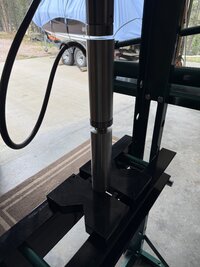
So, I out thought the process… I had my friend make me a support tool to go against the should have the shaft on the nose side to support the shaft while we installed the rear bearing. My thought was I did not want to loose that .91” measurement.

IMG_1199.jpeg

But here is what happened, and good thing I was making up two new complete sets. After getting that rear bearing installed I thought I’d just bolt on the comes to keep the back end clean since I had forgotten to get the nuts and washers that secure the rear of the pump shaft behind the rear bearing. I put the cone on and it didn’t sit flush, it was probably .100” away from being flush, checked it on the other housing that didn’t have the rear bearing installed yet, dropped right to flush. Whiskey Tango Foxtrot????? The face of the cone was touching the rear bearing ? Again, Whiskey Tango Foxtrot? My friend figured it out, we were not supposed to support the other side of the shaft, we set the housing back in the press by itself and put the tool back on…

IMG_0609.jpeg

And brought the ram down and sure enough the rear bearing went further into the housing. Since the rear bearing bottoms out on the end of the shaft, then it gets pressed on further, this drives the shaft down through the front bearing and the outer races are then touching the stand off sleeve which sets the distance between the font and rear bearings, and makes sure there is not undue loading on the inner race of the rear bearing when you tighten the nut.

IMG_0610.jpeg


Next will be the intermediate assemblies.
 
Those press tools look a little large to make on my lathe. What size is his?

The snout of the ram looks pretty fancy as well. Was that something he made or did the press come with it?
 
The Grizzly press is just how it came.

I do not know what size lathe he used. I just gave the dimensions of the pieces I needed.

- .600” OD x 6” solid round stock-this will be used to push the old bearings out of my OEM pumps
-2” OD x 1.140” ID x .910” thick-this is the piece to set the bearing depth / height as specified in the service manual. Note: this is for the 22mm shaft and their associated pumps and bearings, not sure if the dimensions are the same for the 25mm shafts that the 1.8’ and 1.9’s use.
-2” OD x 1” ID x 6” long
-2” OD x .800 ID x 3” long
-32mm socket is 1.64” in diameter which I used to press in the seals on the front of the pump.
 
Thank you, this is something you should not have to worry about for a very long time. Z
Glad to hear. It's been difficult getting the boat out with the high winds we have been getting. It will probably be a long time before I even have half of your hours.
 
Back
Top